
Content automation has shifted from experimental to operational. The question is no longer whether AI can produce content, but where it should operate autonomously and where it requires strategic oversight. The commercial risk is not in using AI. The risk is in misapplying it.
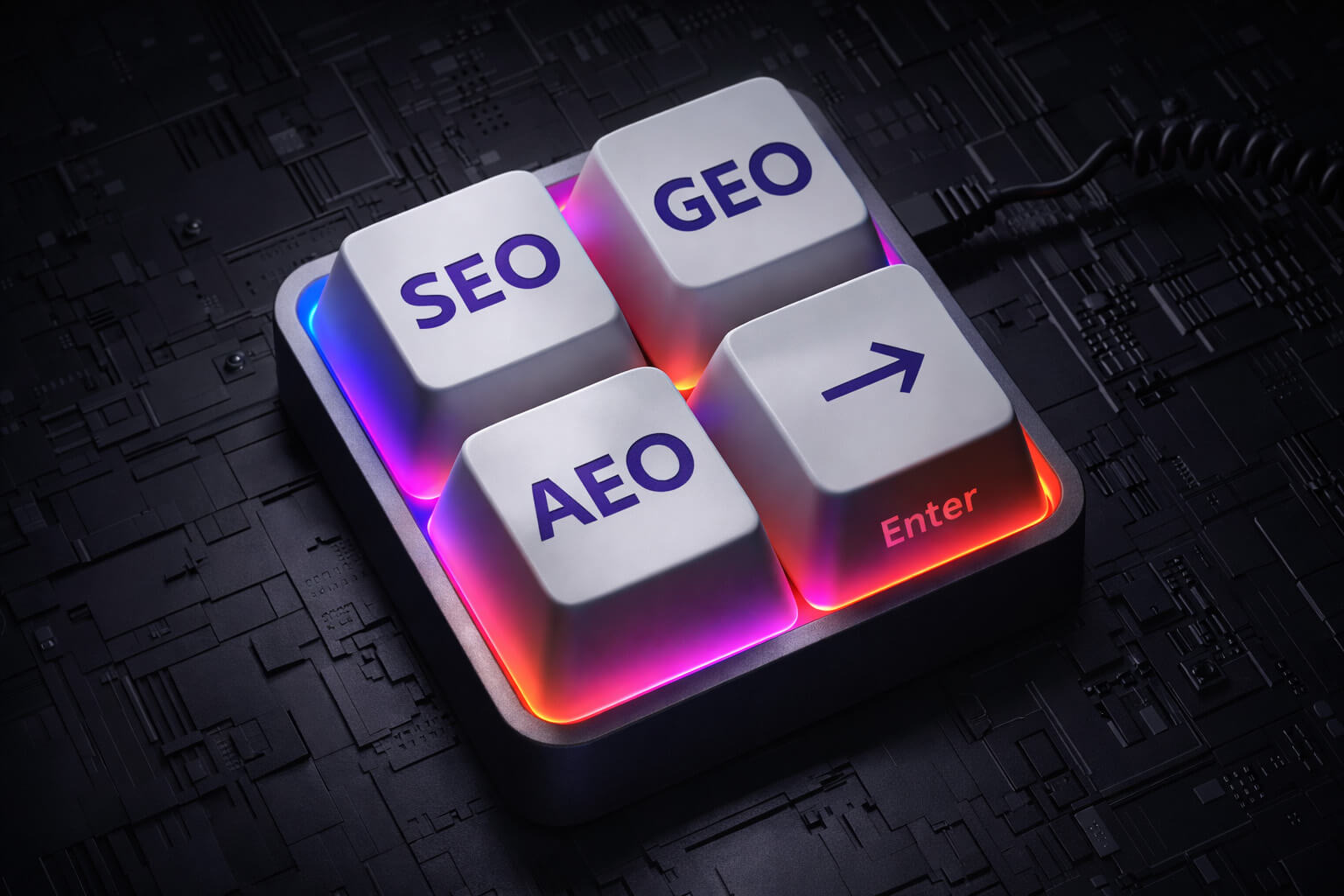
As search evolves across traditional rankings, answer extraction, and AI generated synthesis, content quality signals are becoming more nuanced. Automation can drive scale, but authority, trust, and differentiation still require editorial judgement. The following framework clarifies where AI only publishing is viable, where human review is mandatory, and how this connects to SEO, AEO, and GEO performance in 2026.
Where AI Only Publishing Is Acceptable
AI only publishing can be commercially viable when the content is low risk, structurally predictable, and not central to brand positioning. In these scenarios, the objective is scale and coverage rather than persuasion or authority building. If the content supports existing topical depth rather than defining it, automation can deliver efficiency without materially increasing strategic risk.
This approach works best when strong editorial standards, clear templates, and periodic sampling audits are in place. AI should be operating within defined boundaries, not generating uncontrolled expansions of your content footprint.
- Long tail informational articles with minimal commercial sensitivity
- Glossary and definition pages
- Scaled ecommerce category descriptions with strict templates
- Meta data generation at scale
- Data driven summaries where source material is controlled
Where Human Review Is Non Negotiable
Human oversight becomes essential when content directly affects revenue, credibility, compliance, or perceived expertise. Pages that shape buying decisions, demonstrate authority, or operate within regulated sectors require judgement, nuance, and strategic intent that AI alone cannot reliably provide.
If the page contributes to brand positioning or long term entity authority, it should not be published without editorial refinement. AI can assist with structure and research, but accountability and differentiation must remain human led.
- Core service and high value landing pages
- Finance, legal, health, or compliance related content
- Thought leadership and founder positioning
- Case studies and proof driven sales assets
- Any page designed to influence AI generated citations or authority signals
Dimension | SEO | AEO | GEO |
|---|---|---|---|
Output format | Ranked links | Extracted answers | Synthesised summaries |
User journey | Click through | Often zero click | Often zero click |
Content style | Comprehensive, keyword mapped | Concise, structured answers | Authoritative, entity rich, context heavy |
Key risk | Ranking volatility | Snippet loss | Brand invisibility in AI layer |
Deeper dive into SEO, AEO, and GEO
1) SEO, Search Engine Optimisation
Search Engine Optimisation focuses on increasing visibility within traditional organic search results. The objective is to rank commercially relevant pages for intent driven queries and convert that visibility into measurable revenue. SEO operates within a competitive auction of authority, relevance, and technical performance, where search engines evaluate which pages deserve to surface.
At its core, SEO is about aligning site architecture, content strategy, and authority signals with how search engines interpret intent. It remains the structural foundation of all search visibility efforts.
- Technical performance, crawlability, indexation control
- Keyword and intent mapping aligned to revenue
- On page optimisation and internal linking
- Backlink acquisition and digital PR
- Conversion optimisation from organic traffic
2) AEO, Answer Engine Optimisation
Answer Engine Optimisation extends beyond ranking to focus on being selected as the direct answer within search environments. This includes featured snippets, People Also Ask panels, and voice responses. The goal is to structure content so it can be extracted, interpreted, and presented without requiring a click.
AEO requires clarity, semantic precision, and structured formatting. It rewards pages that provide concise, well organised responses to specific questions while maintaining topical authority across related themes.
- Structured data and schema implementation
- Question led content architecture
- Concise, extractable answer formatting
- FAQ optimisation
- Featured snippet targeting strategy
3) GEO, Generative Engine Optimisation
Generative Engine Optimisation addresses visibility within AI mediated search experiences, where answers are synthesised rather than ranked. Instead of presenting links or extracted snippets, these systems generate summaries that incorporate multiple sources. The objective is to ensure your brand, expertise, and data are reflected within those outputs.
GEO is less about individual keywords and more about entity authority, credibility, and contextual relevance. It requires consistent brand signals across the web and demonstrable expertise that AI systems can confidently reference.
- Entity optimisation and knowledge graph alignment
- Author authority and expertise signals
- Digital PR focused on brand reinforcement
- Proprietary data and original research publication
- Monitoring AI generated brand mentions and citations
The Tools Powering Modern Content Automation
Most businesses experimenting with automated content are not building infrastructure from scratch. They are assembling workflows from a combination of large language models and automation platforms. Understanding this stack is critical when discussing AI only publishing versus human oversight.
On the language model side, platforms such as OpenAI’s ChatGPT, Anthropic’s Claude, Google’s Gemini, and xAI’s Grok infrastructure are commonly used to generate drafts, summaries, and structured content at scale.
Alongside these models, automation tools orchestrate the workflows. Platforms such as n8n, Make (formerly Integromat), and Zoho’s Zoho Flow allow teams to connect prompts, content databases, CMS platforms, and publishing systems into repeatable pipelines.
Strategic Reality in 2026
Search is now multi layer. Rankings, answer extraction, and generative synthesis operate simultaneously, often within the same results interface. Treating SEO, AEO, and GEO as interchangeable services is a strategic error. Each addresses a different visibility mechanism, and each influences how, where, and whether your brand appears during discovery.
These disciplines do not replace one another. They compound.
- SEO builds discoverability.
- AEO increases answer level dominance.
- GEO protects and expands brand presence inside AI mediated experiences.
Organisations that integrate all three will control a greater share of search visibility. Those that rely on traditional optimisation alone will see diminishing influence as AI mediated discovery continues to expand.